


This article uses framework terminology from The 7 Skills to impress™ Book. Any definition or tool shown in bold can be looked up in the Glossary.

With the “Practise Rapport” tools, you will strengthen your ability to inspire and influence ethically.
Rapport creates a climate of trust and understanding. It helps people feel safe with you, open with you, and more willing to engage. When Rapport is present, conversations flow more easily, and resistance softens.
You can build Rapport with anyone. That includes people who disagree with you, people who feel defensive, and openly resistant people. Once you understand how it works, the process becomes simpler than most expect.
In this chapter, you’ll explore how Rapport is built in practice, why our brains respond so strongly to being listened to, and how Rapport quietly amplifies influence. You’ll also see how it works when emotions are high, and conversations feel difficult.
A Spanner In The Works
John, a company director and successful salesman, asked if I would model his sales approach and train it to his team. I liked the idea, so I joined him for a few meetings.
Our first meeting should have been straightforward. John had already agreed the deal in principle with the CEO. We were meeting a director, Simon, to go through the details.
As soon as we sat down, things began to unravel.
The CEO had instructed Simon to bring in an external company. Simon resented it. He felt his judgment had been overruled and his autonomy dismissed. So he resisted. Within ten minutes, he had deflected every suggestion.
“We already do that.”
“Yes, but that’s not really an issue for us.”
John glanced at me, uneasy.
I could see Simon’s pride in his work, his sense of ownership, and his discomfort at being told what to do. So I said:
“It’s clear, Simon, you’re doing a lot of exciting things here. Could we hear more about them?”
That single invitation changed everything.
Simon began talking about his projects what he had built. Where he felt pressure. What mattered to him. John and I listened.
As Simon spoke, his posture softened. His tone shifted. The resistance eased. When John later re-entered the conversation, he did so respectfully, shaping his suggestions around what Simon had already shared.
Simon accepted them. He even said this would be the first of many deals.
Listening opened the door. Influence followed.
A Quick Note: Influence vs Manipulation
There is an ethical question to consider with Rapport. Influence and manipulation are not the same thing.
The Rapport I built with Simon lowered his resistance and made him receptive to John’s services because we genuinely listened and understood where he was coming from.
We learned what Simon had already achieved and where he felt pressure. That allowed John to offer support that actually met Simon’s needs.
If John had used Simon’s openness to push something unnecessary, it would have backfired. Simon would have recognised it quickly. The relationship would have collapsed, and John’s reputation would have suffered.
Sometimes, authentic Rapport reveals that what you’re offering is not the right fit. When that happens, it’s better to leave it for another day.
You preserve trust. And trust opens future doors.
That is the power of ethical influence.
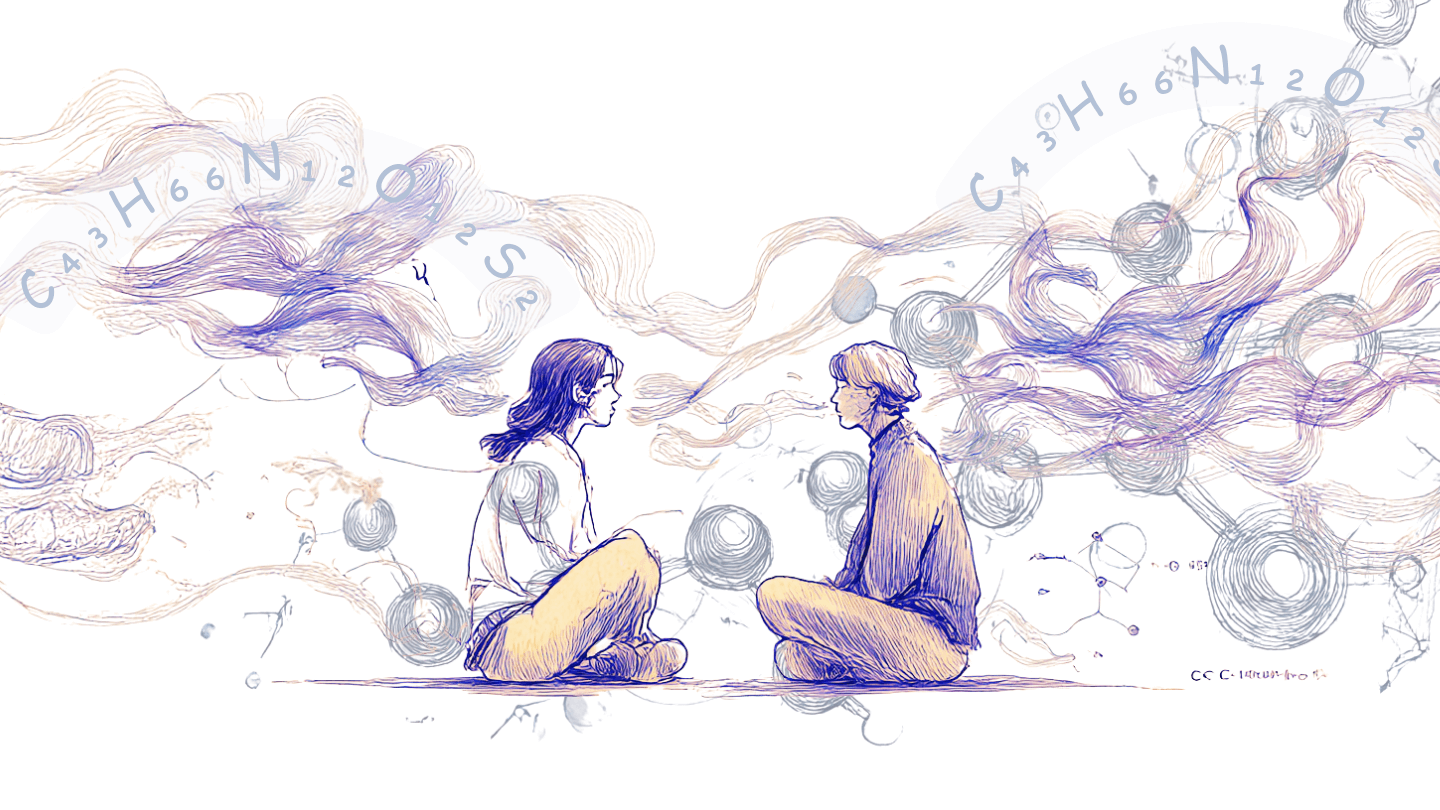
Rapport and the Science Behind the Magic
Simon, like most of us, wanted to feel included and respected. Being instructed without discussion made him feel overlooked. What the CEO saw as efficiency, Simon experienced as a lack of recognition.
This is where Rapport does its work.
Simply listening meets core human needs. It helps people feel safe, valued, and part of something. Defensiveness lowers, trust forms.
Listening has always been a signal of Esteem. When someone gives us their full attention, it tells us our words matter. We feel respected. We feel we belong.
That instinct runs deep. In early human groups, survival depended on cooperation. Those with skills that protected the group were listened to. Attention meant value. Value meant safety.
The same mechanisms operate today.
Modern neuroscience confirms this. When people hear their own ideas reflected back, reward centres in the brain activate. Their perspective feels recognised. They feel capable and worthy.
Being listened to also increases oxytocin, a hormone associated with trust and connection. Oxytocin supports empathy, cooperation, and calm engagement. This is why Rapport feels good for the other person. A fundamental need is being met.
That is the truth of Rapport. It is not a trick or a technique. It is a human connection that allows people to feel understood and open.
Do you remember the question I asked Simon?
“It’s clear, Simon, you’re doing a lot of exciting things here. Could we hear more about them?”
That invitation mattered because it gave him space to speak about what mattered to him. From that point on, my task was simple. Listen fully and ask questions that helped me see the world as he saw it.
I narrowed my attention to one question:
“What do I need to understand so I can see this through Simon’s eyes?”
Everything followed from that.
Within minutes, his posture softened. His tone eased. He began speaking freely. I reflected key phrases and asked clarifying questions. Nothing more.
In under ten minutes, the resistance had gone. When John re-entered the conversation, Simon was open and receptive. John shaped his suggestions around what Simon had shared.
And Simon accepted them.
Authentic listening created the opening. Ethical influence completed it.
No Judgement, No Sharing
Just Listening
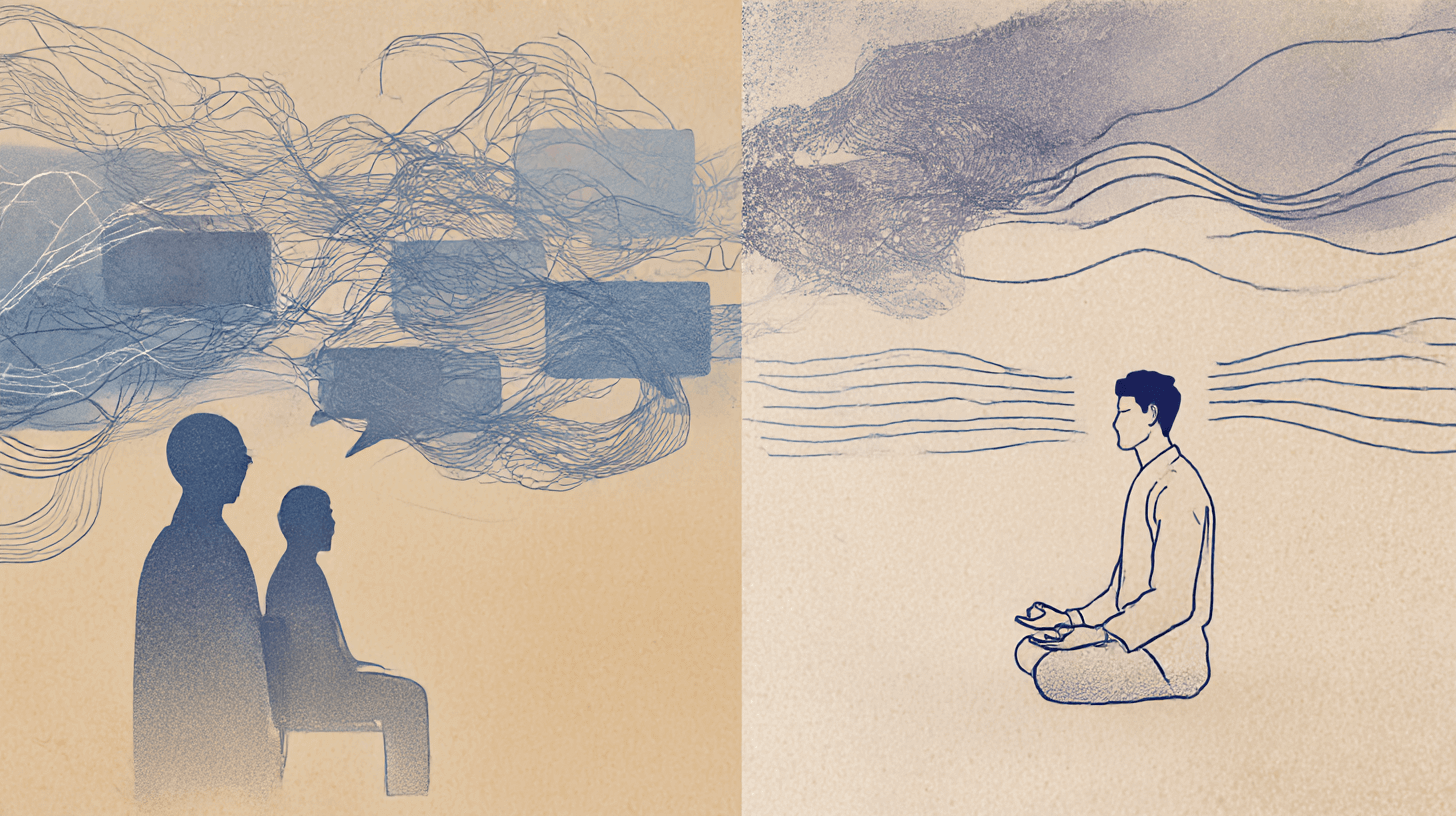
I didn’t judge Simon’s complaints or share my own opinions, even though I had relevant experience. Building Rapport is often misunderstood as having a good conversation. It isn’t.
When you share your own examples, even with good intent, attention shifts back to you. Rapport weakens because you are telling, not listening.
That urge is natural. We all want to be heard. But when Rapport is the goal, your job is to create space, not fill it.
To help myself do that, I use 7–11 breathing. It keeps me calm and focused, and helps me suppress the impulse to speak when silence would serve better.
My meeting with John showed how simple listening breaks down resistance and builds the trust and connection that enhance influence.
Rapport with Angry or Resistant People
Eddard saw Rapport as a powerful tool for negotiating with hostile, unreasonable people. He found that when people felt heard and understood, they were more likely to put down weapons, step off ledges, or release hostages.
I’ve seen the same pattern many times. Most of those stories are too intense for this Book, so here’s a more everyday example.
Trying to Help Can Damage Rapport

A UK call centre asked me to help staff deal with criticism and abuse from clients. They handled home delivery of sensitive medical products.
When clients made mistakes on the online system, deliveries went wrong. Items were left on doorsteps, exposed to neighbours, or spoiled in the rain. Some never arrived at all.
The staff cared deeply. That was part of the problem. Under pressure, they explained, justified, and apologised. The more they explained, the angrier some clients became.
We trained Rapport extensively, but when calls escalated, old habits returned. So I went to the call centre to see it first-hand.
Almost immediately, a member of staff waved me over. An incoming call from Mrs Oakley, one of their most infamous complainers, was ringing through. The room went quiet. The phone was pushed into my hand.
I said hello and received a torrent of anger.
I set myself Outcomes. Be patient. Listen. Reflect. Stay calm.
Her situation was genuinely difficult. She had run out of incontinence pads. Her delivery was late. When it finally arrived, it had been left on the doorstep in the rain. Neighbours had seen it. Everything was ruined.
I let her talk. You cannot influence angry people until they have emptied their emotional cup. I stayed quiet, using small sounds to show I was listening. One word kept returning. “Desperate.”
When there was a brief pause, I said:
“I hear you, Mrs Oakley. It sounds like a desperate situation.”
The shift was immediate.
She was still upset, but now she was talking to me, not at me. The problem stopped being ‘you people’ and became ‘them’. Her tone softened. The anger began to drain.
For several minutes, she spoke. I did not explain, justify, or apologise. I listened and reflected her words. Gradually, her rhythm slowed. Her breathing settled. Her voice became calm.
Only then, once Rapport was established, did I introduce a solution.
“My colleague has been looking into your deliveries. She has an idea that might help. Would you like me to put her on?”
She agreed straight away.
This was a dramatic change from the usual ten-minute tirade that ended with the phone being slammed down.
Rapport did the work. Explanation did not.
Summary
For every meeting, set Rapport as one of your Outcomes. Use Realisation and 7–11 breathing to focus System 1.
Start by getting your client talking about something they care about.
Listen deeply and ask clarifying questions.
Ask yourself: “What do I need to know so I can understand the world through their eyes?”
Reflect back their key phrases.
Whenever possible, repeat their exact words as a question.
Avoid judgment or giving your own examples.
Reflect: don’t rephrase.
Stay authentic.
With angry people, don’t explain or justify anything. Let them offload, then begin at point 3.
What’s Next?
Leadership Rapport is different.
Whatever your style, leadership implies authority and guidance. Anyone can lead when things are easy. Under pressure, everything changes. Pressure drives people to the bottom of the 7 Skills Identity Model. They crave Safety, Belonging and Esteem.
At such times, they accept more direction and may lose faith in overly consultative approaches.
In the next chapter, we explore Rapport in two forms:
Everyday Leadership Rapport: The Power of Recognition and Respect
High-pressure leadership Rapport: Uniting a Frightened Team and Defeating Overwhelming Odds
Both reveal how Rapport becomes even more crucial when the stakes are high.
Leadership Rapport is next.
Part 2: 7 Skills to impress™ Chapter Links
Skill 1. Identify Your Outcome
Skill 4. Reveal Persuasion Pathways
Jacqui & Eddard’s Story Revisited
Read More…
The 7 Skills to impress™ Book | The Blog | The Inner Circle | The 7 Skills App
Further Reading
Baumeister, R. F., & Leary, M. R. (1995).
The need to belong: Desire for interpersonal attachments as a fundamental human motivation. Psychological Bulletin, 117(3), 497–529.
Seminal paper establishing belonging as a core human drive—the motivational root of Rapport and social harmony.
Cacioppo, J. T., & Patrick, W. (2008).
Loneliness: Human nature and the need for social connection. New York: W. W. Norton & Company.
Explores the biological and emotional cost of disconnection, framing Rapport as a health-protective behaviour.
Decety, J., & Jackson, P. L. (2004).
The functional architecture of human empathy. Behavioral and Cognitive Neuroscience Reviews, 3(2), 71–100.
Maps the neural systems that allow us to feel and understand others’ emotions - key to authentic Rapport.
Eisenberg, N., & Lennon, R. (1983).
Sex differences in empathy and related capacities. Psychological Bulletin, 94(1), 100–131.
Reviews evidence that empathy expression varies by gender, illuminating subtle rapport dynamics.
Harlow, H. F. (1958).
The nature of love. American Psychologist, 13(12), 673–685.
Classic study demonstrating that emotional connection - not utility - is fundamental to trust and bonding.
Kosfeld, M., Heinrichs, M., Zak, P. J., Fischbacher, U., & Fehr, E. (2005).
Oxytocin increases trust in humans. Nature, 435(7042), 673–676.
Ground-breaking experiment showing how the hormone oxytocin chemically enhances interpersonal trust.
Guastella, A. J., Mitchell, P. B., & Dadds, M. R. (2010).
Oxytocin enhances gaze to the eye region of human faces. Biological Psychiatry, 67(1), 6–9.
Demonstrates that oxytocin heightens attention to social cues—an essential component of Rapport.
Ditzen, B., Schaer, M., Gabriel, B., Bodenmann, G., Ehlert, U., & Heinrichs, M. (2009).
Intranasal oxytocin increases positive communication and reduces cortisol levels during couple conflict. Biological Psychiatry, 65(9), 728–731.
Reveals oxytocin’s power to lower stress and improve communication during emotionally charged dialogue.
Lieberman, M. D. (2007).
Social cognitive neuroscience: A review of core processes. Annual Review of Psychology, 58, 259–289.
Synthesises research on how the brain constructs understanding of others—bridging neuroscience and Rapport.
Faye, S. (Host). (2020). Neuroscience of connection [Audio podcast episode]. Stefanie Faye Podcast, Series 1 Ep 4. Available at https://stefaniefaye.com
A concise explanation of the brain’s social circuitry and practical tools for cultivating connection.
Weinstein, B., & Heying, H. (2021).
A hunter-gatherer’s guide to the 21st century: Evolution and the challenges of modern life. New York: Portfolio / Penguin.
Explores how ancient social instincts clash with modern isolation—contextualising why Rapport takes conscious effort today.
Syed, M. (2019).
Rebel ideas: The power of diverse thinking. London: John Murray.
Argues that genuine collaboration and psychological safety - built through Rapport - unlocks group intelligence.