

The Thread #4
What Peter Kaufman, Joe Rogan and a nineteen-year-old student taught me this week

From the Doldrums to On Top of the World
A week in the doldrums. My girlfriend was away, there was a neighbour’s garden party on Saturday that I absolutely did not feel like going to, and I could sense myself beginning to drift: away from people, away from effort, away from anything that required me to show up and engage.
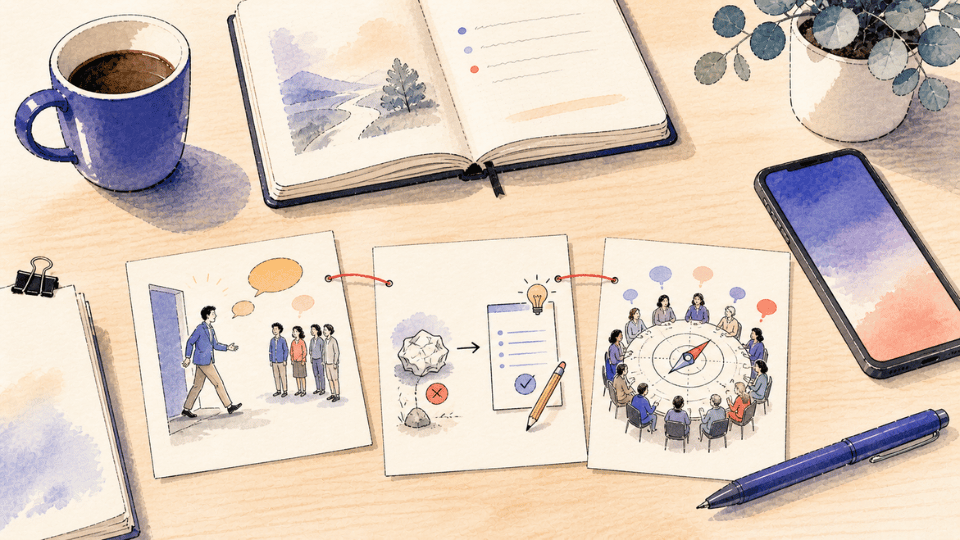
What pulled me out of it was something I’d been writing about: Peter Kaufman’s instruction to go positive and go first. Don’t wait until you feel like it. Don’t wait for someone else to reach out. You go first, and when you go, you go positive.
So I did. I picked up the phone. I sent a few emails to friends I hadn’t been in touch with for a while. The responses came back warmer than I’d expected, as they nearly always do, and something in me shifted. I went to the party alone, used the rapport skills that are Skill 3 of the 7 Skills, and had a genuinely good time. This week I feel on top of the world. That’s not hyperbole. It’s what going first does when you actually do it with positivity.
The second thread running through the week is one I’ve been living with for a while now: the professional learner idea from the Joe Rogan piece.
I’ll be honest with you. Building this Substack has been harder than I expected, and not always in the ways I anticipated. The platform isn’t quite set up for what I’m trying to do, and I’ve been finding my way through a system that occasionally feels like it’s working against me rather than with me. There is, though, a lovely community beginning to grow here, and that means more to me than any metric. Where all this ends up, whether it stays on Substack or eventually finds a different home, I’ll share in due course.
What’s made the journey manageable is treating every setback as information rather than a verdict. That’s what the professional learner frame does: it takes the things that don’t go well and turns them into information. In Elevate Formula terms, it externalises difficulty. The friction of building this site isn’t a comment on my worth as a writer. It’s just feedback, and feedback is useful. I find that reframe practically useful rather than just intellectually appealing, and for me that’s the real distinction.
One concrete thing changed this week. I’ve removed the paywall entirely. All posts and chapters are now free to read.
It had been nagging at me for a while. The blog posts are drawn from the book. The series posts (the 5 Rules pieces and the rest) are too. Putting them behind a subscription felt like the thing I was supposed to do, rather than something that made sense. Taking the paywall down feels much more like me. So please, go and read them all.
This Week’s Post
It grew out of a series of conversations I’ve had with my partner’s nineteen-year-old daughter, who is in the middle of something recognisable to anyone who remembers that age: her student friends hold their views with real force, and the social cost of questioning those views can feel quite high. What she has managed to do, and I think this is quite unusual at nineteen, is stay genuinely open. She’s developing her thinking in a more rounded way than most people around her, and it’s a pleasure to watch.
The idea at the centre of the post is that being wrong, properly wrong, willing-to-change-your-mind wrong, is not a failure of intelligence. It’s closer to how evolution works. It isn’t a common view, and it tends to make people uncomfortable, but people who take it seriously seem to move through life with more ease and more success than those who don’t.
And yes, I’m aware of the implication: if I really believe the post, I have to hold open the possibility that I’m completely wrong. I do. That’s part of what makes it interesting.
Go and have a look. Until next week.